




How To Measure And Calculate Carpet Area For Stairs: A Detailed Guide
When installing carpet on stairs, one of the most crucial steps is measuring and calculating the required carpet area accurately. This ensures you purchase the right amount of material, avoid waste, and achieve a perfect fit. Having installed stair carpets multiple times, I’ve learned that small miscalculations can lead to costly mistakes. This guide will walk you through the process, offering insights from hands-on experience.
Key Points To Consider When Measuring Stairs For Carpet
Before grabbing a tape measure, consider these key factors that influence how much carpet you need:- Stair shape and size: Stairs can be straight, winding, or L-shaped, affecting carpet measurements.
- Carpet type and installation method: Different carpets and installation styles require varying amounts of material.
- Landings and overhangs: Measure these separately to ensure full coverage.
- Extra material for securing the carpet: Additional carpet is needed for tucking, folding, and securing edges properly.
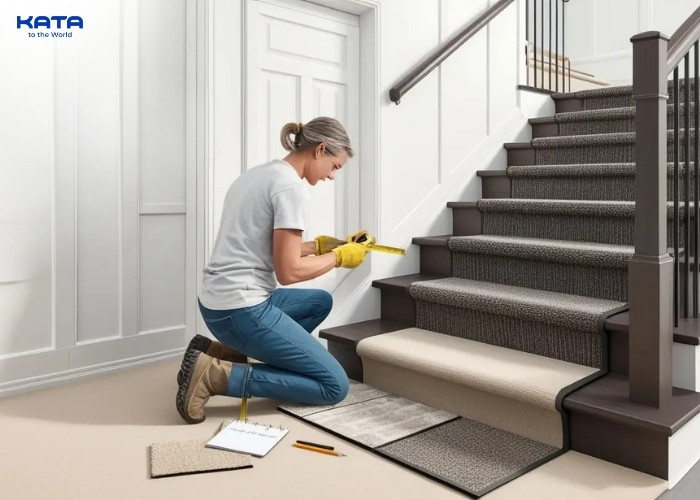
Note when measuring stairs for carpeting
The Tools You Need To Measure Stairs For Carpet
To get accurate measurements, you’ll need a few essential tools:- Measuring tape: A long, flexible tape measure is best for capturing stair dimensions accurately.
- Notepad or smartphone: Essential for recording each measurement to avoid errors.
- Calculator: Helps with quick calculations of areas and total carpet requirements.
- Straightedge ruler: Useful for measuring straight lines precisely, especially on landings.
- Carpet measuring guide or template: If available, this can assist in taking consistent measurements.
- Painter’s tape or chalk: This can be used to mark measurements temporarily on the stairs for reference.
- Laser distance measurer (optional): Provides quick and highly accurate readings for larger areas.

Stair measuring tool for carpet
Steps To Measure Stairs For Carpet
Measure The Width Of The Stairs
Start by measuring the width of each step from one side to the other using a measuring tape. Most stairs have a standard width, but older or custom-built staircases may vary slightly. Take multiple measurements along different points of the step to ensure accuracy. If you’re planning a stair runner, determine the amount of space to leave on each side for a balanced appearance. Recording these measurements accurately will help prevent mistakes during carpet installation.Measure The Depth Of The Stairs (Tread)
Each step features a tread, which is its flat, horizontal top. Measure from the front edge (nosing) to the back where it meets the riser, ensuring accuracy by using a measuring tape. Take multiple measurements if necessary, especially on older or custom staircases where dimensions may vary. This measurement is crucial for determining how much carpet is needed to cover each step completely, preventing shortages or excess material.Measure The Height Of The Stairs (Riser)
The riser is the vertical part connecting two steps. Measure from the bottom of one step to the top of the next using a measuring tape, ensuring precision. Some staircases may have risers of varying heights, so take measurements at multiple points if needed. Since the carpet needs to cover both the tread and riser, this measurement is crucial for ensuring a proper fit. Record the dimensions carefully to avoid miscalculations during installation.=>>> Suggested articles: How to remove carpet from stairs

Measure width tread and riser on stair
Count The Number Of Stairs
Count the total number of steps in your staircase carefully. If your staircase has multiple sections with different dimensions, document each section separately to ensure accuracy. Taking a systematic approach prevents errors and ensures the correct carpet measurements for each part.Measure The Landing Size (If Any)
If your staircase has landings, measure their length and width accurately using a measuring tape. Some staircases feature multiple landings of different sizes, so take individual measurements for each and document them carefully. Landings often require additional carpet beyond just their flat surface, especially if they have nosing or wrap-around edges. If your staircase has an irregularly shaped landing, break it into smaller sections and calculate each separately before adding them together. Properly measuring landings ensures full coverage and prevents material shortages during installation.Observe Any Special Requirements
Check for irregularities such as curved steps, extended nosing, or extra-wide landings, as these factors can significantly impact carpet measurements. Curved steps may require precise template cutting, while extended nosing demands additional material to ensure full coverage. Extra-wide landings might need seams or multiple carpet pieces for a seamless look. Identifying these unique features in advance helps plan for extra carpet and prevents miscalculations during installation.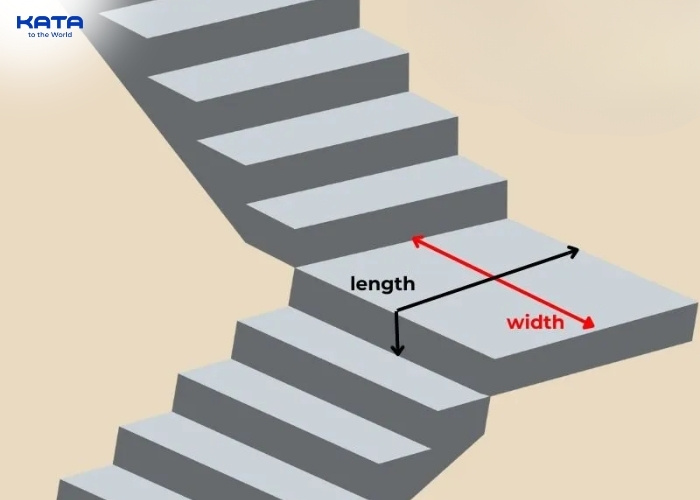
Observe any special requirements
How To Calculate Carpet Square Footage On Stairs?
Calculate The Area For One Step
The carpet length for one step includes the tread depth, riser height, and an overlap allowance to secure the carpet properly. This overlap ensures the carpet wraps smoothly over the edge and stays in place, preventing movement over time. The formula for calculating carpet length per step is:Carpet length for one step = Tread depth + Riser height + Overlap
The overlap is crucial for achieving a professional finish and typically ranges from 2 to 4 inches (5-10 cm), depending on the carpet thickness and installation method. Additionally, if using a waterfall-style installation, a larger overlap might be required for a smooth drape. Once the total length is determined, the area for one step is calculated as follows:
Area of one step = (Tread depth + Riser height + Overlap) x Step width
This formula ensures that each step is covered adequately, preventing miscalculations and material shortages during installation.
=>>> Suggested articles: How to protect carpeted stairs
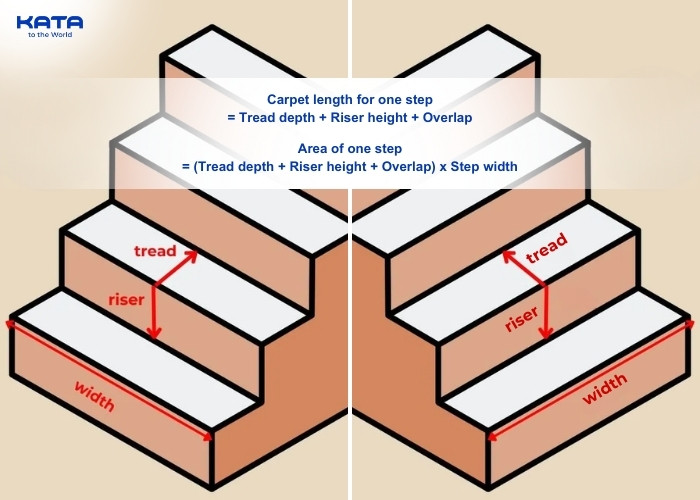
Calculate the area for one step
Calculate The Total Area For All Steps
Once the area of a single step is determined, multiply it by the total number of steps in your staircase. This step is crucial to ensure that every part of the staircase is covered adequately, preventing material shortages or excessive waste. If your staircase consists of steps with different dimensions, calculate each type separately before summing the total area.Additionally, consider staircases with turns or complex shapes, as they might require extra material for seamless coverage. Taking precise measurements and double-checking calculations will help ensure a smooth installation process.
Total area of steps = Area of one step x Number of steps
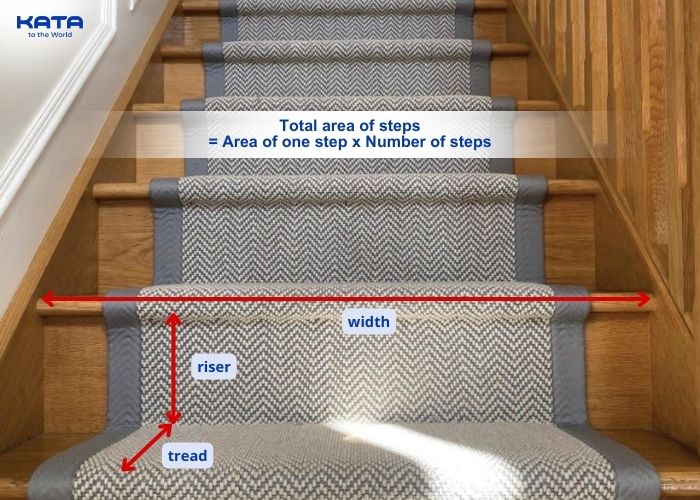
Calculate the total area for all steps
Calculate The Area For Landings (If Any)
If your staircase has landings, measure their length and width accurately using a measuring tape. Landings can vary in size, so take precise measurements for each one individually. Use the following formula to calculate the area of each landing:Landing area = Landing length x Landing width
If your staircase has multiple landings, calculate the area for each separately, then sum all values to determine the total landing area. Additionally, consider any irregular shapes, curves, or extra-wide sections that may require adjustments in your calculations. Taking detailed and accurate measurements ensures the correct amount of carpet is accounted for, preventing material shortages or excess waste.
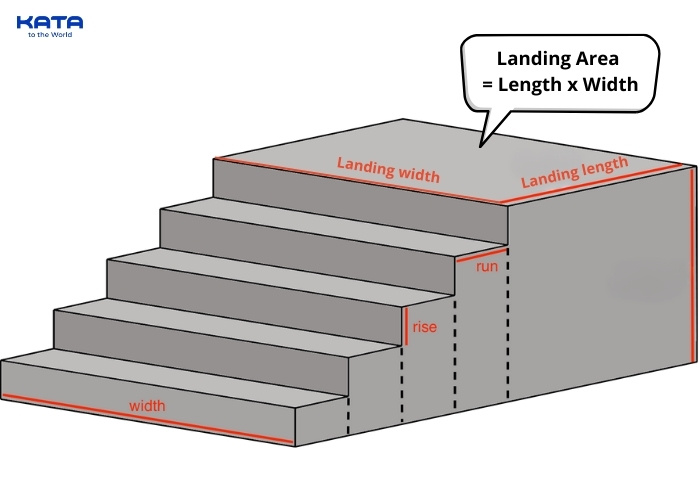
Calculate the area for landings
Calculate The Total Carpet Area Needed (Excluding Waste)
To determine the total carpet needed before accounting for waste, sum up the area of all the steps and landings. This ensures an accurate calculation before adding extra material for cutting and fitting. The formula is as follows:Total carpet area (excluding waste) = Total area of steps + Total area of landings
It's important to double-check measurements for each section, particularly if your staircase includes curved or irregularly shaped landings, to prevent shortages or excessive waste. Properly summing these areas ensures an efficient and cost-effective carpet installation.
=>>> Suggested articles: Different Carpet Types Explained
Calculate Waste And Other Factors
Carpet installation always involves some level of waste due to cutting and fitting. To ensure you don’t run short, add a 10-15% buffer. This extra carpet helps with pattern matching, adjustments for complex stair shapes, and securing edges during installation.Considerations:
- Waste allowance: Add 10-15% to the total calculated area to accommodate cutting waste and installation needs.
- Pattern alignment: If your carpet has a pattern, additional material may be necessary to match designs across steps.
- Installation style: Full coverage requires more carpet than a runner, and wrapping carpet around stair edges may demand extra material.
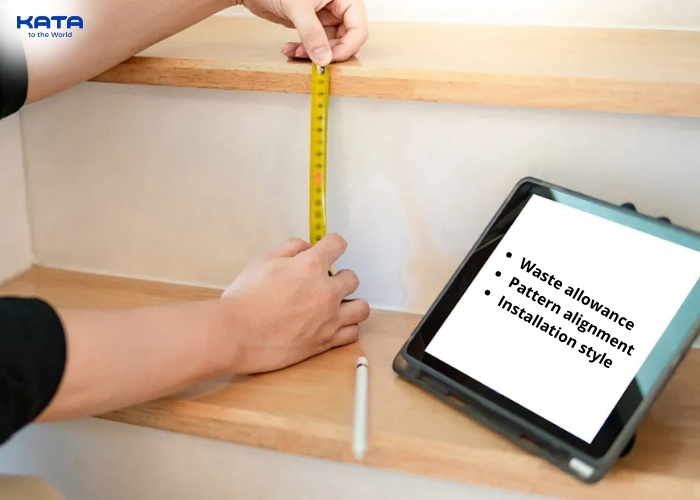
Calculate waste and other factors
How Much Carpet Do You Need For Stairs?
General formula (estimate):Total carpet area ≈ [(Tread depth + Riser height + Overlap) x Step width x Number of steps] + (Total landing area) + (10-15% waste for cutting and adjustments, more if pattern matching is required)
Simple example:
For a staircase with the following measurements:
Step width: 1 meter
Tread depth: 0.3 meters
Riser height: 0.2 meters
Overlap: 0.05 meters
Number of steps: 13
No landings
Calculation:
Carpet area for one step ≈ (0.3 + 0.2 + 0.05) x 1 = 0.55 square meters
Total area of steps ≈ 0.55 x 13 = 7.15 square meters
Add 10% waste for cutting: 7.15 x 0.10 = 0.715 square meters
Total carpet area before pattern matching ≈ 7.865 square meters
If pattern matching is needed, consider adding 5-10% to ensure alignment across steps.

Estimate The Cost To Carpet Stairs
Once you know the total carpet area, you can estimate costs by multiplying it by the price per square foot or meter. Carpet prices vary based on material, quality, and installation method. Higher-end carpets like wool or patterned designs will cost more than synthetic or basic options. Additionally, labor costs can significantly impact the total price, especially if your stairs have complex shapes that require detailed cutting and fitting.For example, if your total carpet area is 7.865 square meters and the carpet costs $20 per square meter, your estimated material cost would be:
7.865 x 20 = $157.30
If installation costs an additional $5 per square meter, the total labor cost would be:
7.865 x 5 = $39.33
Thus, the total estimated cost for carpeting the stairs would be $196.63. Prices can fluctuate depending on the region, carpet quality, and additional expenses such as padding or adhesive materials. Always get multiple quotes from installers to ensure the best value for your budget.

Estimate the cost of stair carpeting
Mistakes To Avoid When Measuring Stairs For Carpet
From my experience, here are some common mistakes to watch out for:- Forgetting the overlap – This can cause the carpet to come up short.
- Not accounting for waste – Always add extra material.
- Ignoring landings – Measure all sections of the staircase.
- Overlooking pattern alignment – If your carpet has a pattern, it may require more material for proper alignment.
- Measuring inconsistently – Always measure each step individually if they aren’t uniform.
Measuring and calculating the carpet area for stairs requires precision, but with the right approach, it’s straightforward. By carefully measuring each component, considering extra allowances, and factoring in potential waste, you can ensure a seamless installation with minimal surprises. From personal experience, taking the time to double-check measurements saves both time and money in the long run.
Other articles



COPYRIGHT 2021 © ALL RIGHT RESERVED KATAVINA


[×]
REGISTER AGENT
We will contact you as soon as possible