



How to Keep Car Seat Covers From Sliding
Why Seat Covers Keep Sliding in the First Place

Most of the time, it comes down to fit.
A lot of people use universal seat covers, and while they’re convenient, they’re not made for your specific car. That means there’s always going to be a bit of extra fabric somewhere. It might not seem like a big deal at first, but every time you get in and out of the car, that looseness starts to shift.
Another thing I’ve noticed is that many covers just aren’t secured properly underneath. They might come with straps or hooks, but if those aren’t tightened enough—or worse, not used at all—the cover has nothing really holding it in place.
Material also plays a role. If you’re dealing with leather seats or smooth fabric covers, there’s just not enough friction to keep things stable. And something as simple as dust or crumbs underneath can make it even worse, which most people don’t think about.
How to Actually Keep Your Car Seat Covers from Slipping
1. Start with the Basics: Proper Installation
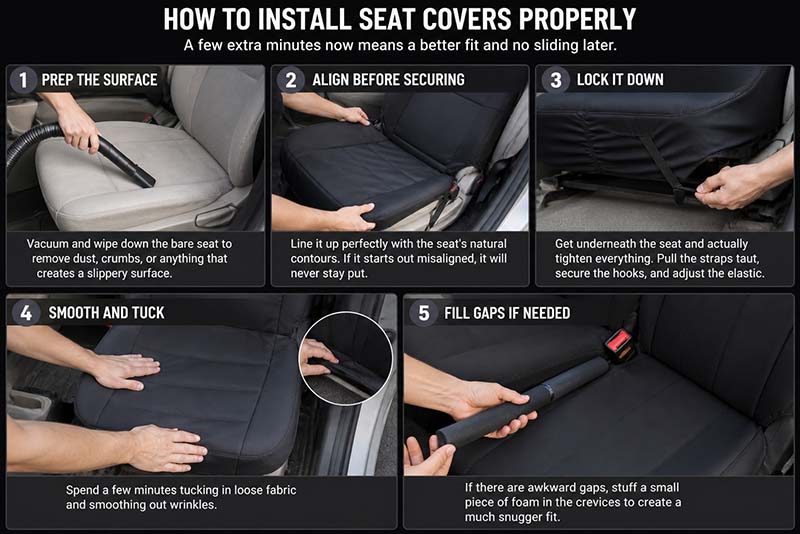
This sounds obvious, but a rushed installation is where most problems start. Taking an extra ten minutes here saves you hours of adjusting later.
-
Prep the surface: Vacuum and wipe down the bare seat to remove dust, crumbs, or anything that creates a slippery surface.
-
Align before securing: Don't just throw the cover over the seat. Line it up perfectly with the seat's natural contours. If it starts out misaligned, it will never stay put.
-
Lock it down: Get underneath the seat and actually tighten everything. Pull the straps taut, secure the hooks, and adjust the elastic. Doing this halfway is the #1 reason covers shift.
- Smooth and tuck: Spend a few minutes tucking in loose fabric and smoothing out wrinkles. If there are awkward gaps, stuff a small piece of foam in the crevices to create a much snugger fit.
2. Add an Anti-Slip Layer

If you have installed the cover perfectly and it still slides, adding a friction layer underneath is the easiest and cheapest fix.
- Choose your grip: You don't need expensive automotive gear. A simple rubber floor mat, non-slip shelf liner, or a silicone pad works wonders.
- Trim to fit: Cut the grip material to match the shape of the seat bottom and place it directly between the seat and the cover.
- Pro Tip: Adding a shelf liner is especially helpful if you have leather seats, which are notoriously slippery under fabric covers.
3. Reinforce with Extra Anchoring
Sometimes a seat cover only moves in specific trouble spots, like the front edge behind your knees or the main seat cushion.
-
Industrial Velcro: This is a highly practical, non-permanent fix. Stick one side of the Velcro to the seat base and the other to the inside of the cover.
-
Extra clips and anchors: Fasten additional bungee cords or suspender clips underneath the seat. If you are a heavy commuter, this helps stop the slow, gradual shifting that happens over time.
4. Consider Upgrading Your Covers
If you have tried all the hacks and nothing works, the problem might be the cover itself. If you drive frequently, have kids, or travel with pets, investing in the right gear will save you constant headaches.
| Upgrade Option | Why It Works Better |
| Custom-Fit Covers | Unlike universal covers, these are laser-cut for your exact vehicle's seats. Zero loose fabric means zero shifting. |
| Textured Backing | Look for covers specifically manufactured with rubberized or silicone micro-dots on the underside to grip the seat. |
| High-Friction Materials | Neoprene (wetsuit material) and heavy padded fabrics naturally create more friction and contour to the seat better than thin polyester. |
The One Quick Fix to Avoid: Double-Sided Tape.

A lot of people try using double-sided tape as a quick fix to keep covers from moving. It usually backfires badly. Cars get intensely hot, especially in the summer, with interior temperatures easily reaching 60°C to 70°C. Under that kind of heat, the adhesive melts and bakes directly into your seat:
-
On leather: It can permanently strip and damage the surface.
-
On fabric: It leaves sticky, gummy stains that are almost impossible to remove.
The Takeaway: At that point, the seat cover isn’t protecting anything anymore—it’s actually causing damage. It’s simply not worth the risk when there are safer, non-adhesive options available.
How to Choose Seat Covers That Don’t Slide
If you are buying new seat covers, the easiest way to prevent sliding is to buy the right design from the start. Keep these four factors in mind:
-
Prioritize Custom-Fit: Custom-fit covers are usually the safest choice because they perfectly match your seat's shape. Less excess fabric means less room for the cover to shift.
-
Check for Anti-Slip Backing: Look for covers with a built-in rubberized or friction layer. That extra layer makes a massive difference, especially on smooth leather seats.
-
Inspect the Anchoring: Pay attention to how the cover is secured. You want strong straps, sturdy buckles, and tight elastic edges to keep things locked down.
-
Choose High-Friction Materials: Neoprene and textured fabrics naturally perform better and grip the seat more securely than smooth polyester, which tends to slide.
(Note: If you use your car a lot, or frequently have passengers, kids, or pets, it is highly worth investing in a durable cover with heavy-duty anchoring.)
=> Read More: How Much Does It Really Cost to Reupholster Car Seats? (Real Prices 2026)
Frequently Asked Questions
What’s the easiest way to stop seat covers from sliding? Make sure it’s installed properly first. Clean the bare seat, tighten everything down securely, and then add a non-slip layer (like a silicone pad or shelf liner) underneath if needed. That usually solves it.
Can you use double-sided tape? You can, but you really shouldn’t. High cabin heat can melt the adhesive and permanently damage your seats.
Why do seat covers keep coming loose? Usually, it boils down to three things: they don’t fit well (too much loose fabric), the material is too smooth, or the straps weren’t secured tightly enough during installation.
Are custom-fit covers actually better? In most cases, yes. They fit better, stay in place much longer, and require far less daily adjustment.
Final Thoughts
At the end of the day, keeping seat covers from sliding isn’t complicated. It’s mostly about getting the fit right, installing them properly, and adding a bit of hidden grip if needed.
Once everything is set up the right way, you won’t really have to think about it again—and that’s exactly the point.
Other articles

How to Remove Paint from Car Seats (Without Damaging Fabric or Leather)

How to Choose the Right Size Rubber Floor Mats for Your Car

What is Neoprene Car Interior Material? Benefits, Uses & Comparison



