



How to Choose the Right Size Rubber Floor Mats for Your Car
Choosing the right size rubber floor mats isn’t just about matching your car name.
To get a proper fit, you need to know your mat type (custom, semi-custom, or trim-to-fit), confirm your exact vehicle specs, and make sure the retention points line up correctly.
In this guide, you’ll learn how to choose the right size rubber floor mats for your car — step by step.
Types of Rubber Car Floor Mats (Size & Fit Explained)
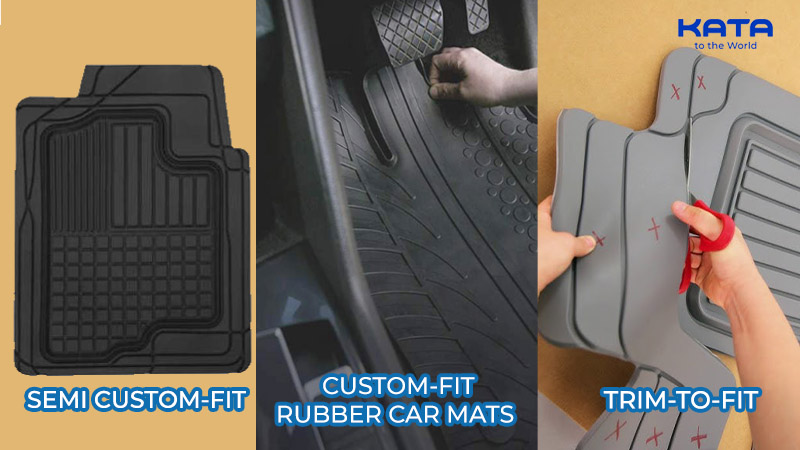
Most mats on the market fall into one of three categories. Choosing the right rubber floor mat sizing depends entirely on which type you buy.
Custom-Fit (The “No Guesswork” Option) If you want a hassle-free, drop-in solution, this is your best bet. Custom-fit mats are laser-measured for a specific car's make, model, and exact trim level.
-
The Good: Edges sit flush against the floorboards, and nothing curls up.
-
The Catch: You must double-check your vehicle details. A small mismatch in the model year or floor retention clips can ruin the fit and create a massive safety hazard.
Semi-Custom (Close... But Not Perfect) Semi-custom mats are designed to fit a broad group of cars with similar floor plans.
-
The Good: They look fine at a quick glance and are generally budget-friendly.
-
The Catch: The edges won’t be exact, some areas may feel loose, and the overall fit is inconsistent. It is acceptable for many, but do not expect perfection.
Trim-to-Fit (The DIY Route) These mats arrive oversized with molded trim lines, requiring you to cut them to shape.
-
The Good: Usually the cheapest option available and works well if you take your time.
-
The Catch: Cut too much, and there is no going back. Rushing the process guarantees a sloppy fit.
Hidden Factors That Affect Floor Mat Size and Fit

Most drivers think, “I have the right car model, so I’m good.” Unfortunately, small structural differences in your car can completely change how a mat fits.
- Manual vs. Automatic Transmissions: Manual cars have a clutch pedal, which changes the footwell layout and reduces available space. Using a mat meant for an automatic can cause lifting, awkward bunching near the pedals, or dangerous interference while driving.
- AWD vs. FWD: Different drivetrains alter the floor structure, especially in the rear. The height and shape of the center transmission hump will dictate how a rear mat sits.
- Interior Layout Tweaks: Even within the same model year, variations in seat rails or minor trim differences can throw off a mat's alignment.
- One thing to keep in mind: Major automakers stress one non-negotiable rule: Your floor mat must stay locked in place. No shifting. No sliding. Ever.
How to Choose the Right Size Rubber Floor Mats for Your Car
At the end of the day, it comes down to three things
-
The Type of Mat
-
Your Exact Vehicle Details
-
How It Behaves After Installation
The Golden Rule: A mat that truly fits shouldn’t move, bunch up, or get anywhere near your pedals. If it does, it’s not the right fit—simple as that.
If You’re Buying Custom or Semi-Custom Car Mats
Even the best-fit custom mat won’t perform properly if these foundational details are overlooked. Make sure you check these two things before upgrading:
1. Stop Guessing Your Vehicle Specs

Relying on just the car’s general name is where most fitment issues begin. Even within the same model year, different trims can have unique floor layouts (e.g., a 2021 Honda Civic EX fits differently than a 2021 Civic Type R).
How to confirm your exact fit:
-
Locate your 17-digit VIN: Find it on your vehicle registration, insurance card, or the driver’s side dashboard windshield.
-
Use a VIN Decoder: Enter the number into a trusted tool like the NHTSA or Kelley Blue Book.
-
Match the Specs: Use the exact model, trim, and configuration provided to order your mats.
2. Inspect the Retention System
A mat may appear to fit perfectly around the edges, but if it doesn't lock into your car’s factory retention system, it is not safe.
-
The Safety Risk: An unsecured mat can slide forward, twist, or bunch up behind the pedals—turning a minor annoyance into a serious driving hazard.
-
What to Look For: Always verify that your new mats are fully compatible with your vehicle’s factory hooks or OEM floor mat retention system.
If You’re Using Trim-to-Fit Car Mats

If you’re taking the DIY route, patience is your best tool. Rushing this process almost always backfires.
Ditch the Tape Measure: Car floors aren’t flat. They curve, dip, and have raised sections. Basic length-by-width measurements won’t work.
The Right Approach:
-
Use your old factory mat as a tracing reference, or create a quick cardboard template.
-
Start big. Always leave the mat slightly larger than you think you need.
-
Trim a little, test the fit in the car, and trim again. Remember: Once you cut too much, there is no fixing it.
3-Step Post-Installation Safety Check
Do not skip this. Highway safety organizations (like Transport Canada and the NHTSA) strongly recommend testing your mats before you hit the road. Once installed, take 60 seconds to perform this check:
Step 1: Check the pedals
Sit in the driver’s seat and press the accelerator, brake, and clutch (if you have one) all the way down.
Nothing should touch the mat, and nothing should feel restricted. If the mat gets anywhere near the pedals, don’t ignore it. Take it out and fix the fit before driving.
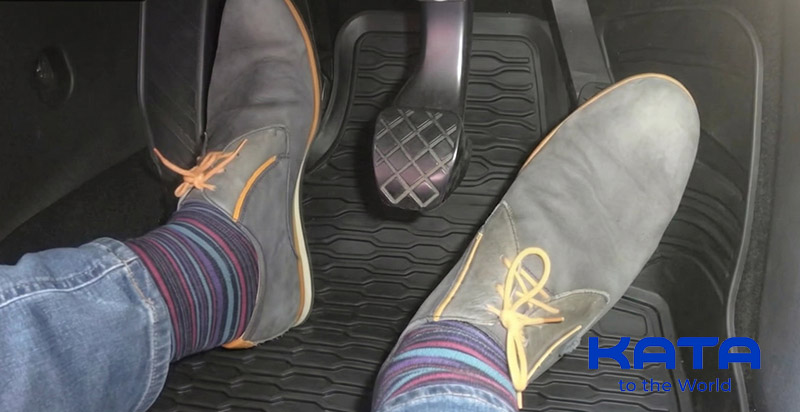
Step 2: See if the mat moves
Use your foot to push the mat forward, slide it side to side, and shift your position like you normally would.
It should stay locked in place the entire time. If it slides or shifts even a little, that’s a problem — and it usually gets worse over time, not better.
Step 3: Move the seat back and forth
Slide the driver’s seat all the way forward, then all the way back.
Watch what happens to the mat as you do it. If it starts to wrinkle, lift, or get pulled out of place, it’s a sign the fit isn’t quite right.
Common Rubber Floor Mat Sizing Questions (FAQ)
Are rubber floor mats universal?
No. Rubber floor mats are not one-size-fits-all. Even flexible materials like rubber still need to match your vehicle’s floor shape, model, and trim for a proper fit.
Do rubber floor mats need to match my exact car model?
Yes. For the best fit, rubber floor mats should match your vehicle’s make, model, year, and trim. Even small differences can affect how they sit on the floor.
Can rubber floor mats be trimmed to fit any car?
Some rubber mats are designed to be trim-to-fit, but not all. If you’re cutting them yourself, always trim gradually and test the fit as you go.
Choosing the right rubber floor mats for your car isn’t just about size — it’s about making sure they stay secure and never interfere with your driving. Take the time to check the fit properly, and you’ll avoid most common problems.
Other articles

How to Keep Car Floor Mats from Sliding
How to get gum out of car floor mat? 5 useful tips 2026

OEM vs Custom-Fit Aftermarket Car Floor Mats: Which Is Better?



