



OEM vs Custom-Fit Aftermarket Car Floor Mats: Which Is Better?
When comparing OEM and aftermarket floor mats, the choice isn’t as broad as it first seems. While aftermarket options technically include both universal and custom-fit designs, universal mats are often ruled out due to poor fit and potential safety issues.
That leaves a more practical comparison: OEM mats versus custom-fit aftermarket mats. These are the two options most drivers actually consider when looking for a balance between fit, protection, and long-term usability.
Understanding OEM and Custom-Fit Aftermarket Floor Mats
To compare them properly, you first need to understand how OEM mats differ from custom-fit aftermarket mats.What Are OEM Floor Mats?
OEM (Original Equipment Manufacturer) car floor mats are designed by the automaker to match a specific vehicle model. Because they follow the car’s original specifications, the fit is usually spot-on, and they work seamlessly with the factory anchor points.Pros of OEM Floor Mats:
- Precise factory fit: Designed for your exact model, so everything lines up cleanly with no gaps
- Secure anchor compatibility: Locks into place using the car’s built-in clips, so it doesn’t shift while driving
- Clean, original look: Blends in with the interior and keeps the factory styling intact
- Safety-focused design: Made to avoid interference with pedals from the start
- Easy to install and remove: No trimming or adjustments needed
- Reliable replacement option: Straightforward swap if you’re sticking with the same vehicle model
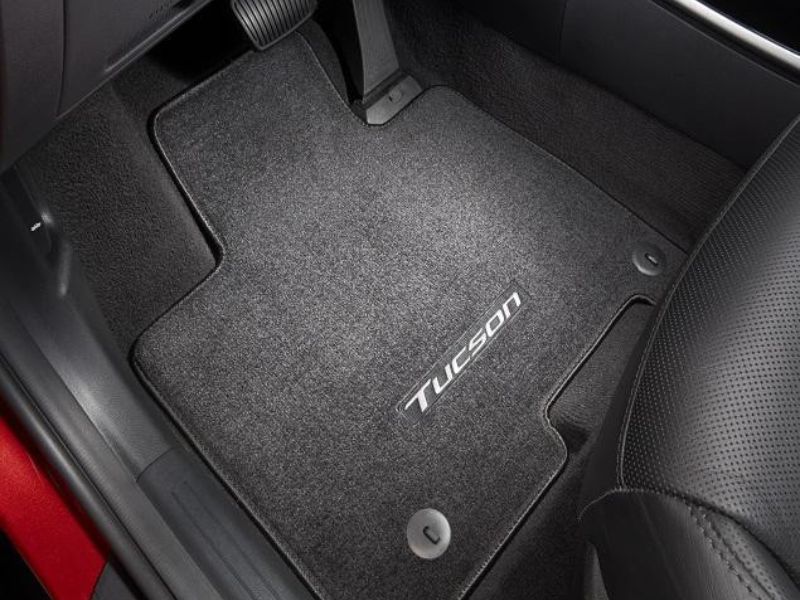
Cons of OEM Floor Mats
- Limited coverage: Mostly protects the flat floor, leaving edges more exposed to dirt and water
- Absorbs moisture (carpet types): Can trap water, mud, and odors over time
- Low edge protection: Liquids can spill over more easily compared to raised-edge designs
- Wears faster in key areas: Especially around the driver’s heel with regular use
- Not ideal for harsh conditions: Struggles with heavy rain, mud, or sand
- Limited material options: Less variety compared to custom-fit aftermarket alternatives
What Are Custom-Fit Aftermarket Floor Mats?
Custom-fit aftermarket car floor mats are produced by third-party brands rather than the vehicle manufacturer. Custom-fit mats are designed specifically for each vehicle model, allowing them to sit securely in place while providing more complete floor coverage and protection.Pros of Custom-Fit Aftermarket Floor Mats
- Better coverage and spill protection: Raised edges help contain water, mud, and debris, especially around the edges
- Water-resistant and easy to clean: Materials like TPE, PVC, or rubber don’t absorb moisture and can be rinsed off quickly
- Strong dirt retention: Grooves and textured surfaces trap sand and debris instead of spreading it around
- More durable for daily use: Holds up better over time, especially in high-traffic areas
- More design options: Available in different materials, colors, and styles
- Helps preserve resale value: Keeps the original carpet cleaner underneath
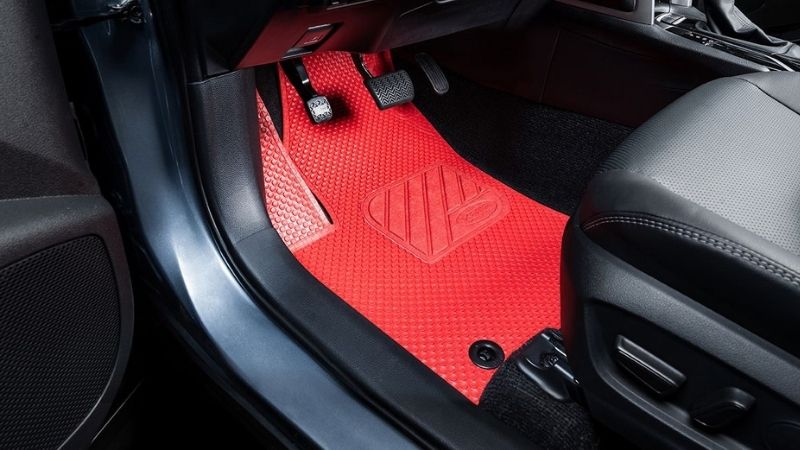
Cons of Custom-Fit Aftermarket Floor Mats
- Quality varies by brand: Not all products deliver the same level of fit or durability
- Possible odor with cheap materials: Lower-end mats may smell, especially in hot weather
- Not always perfect with factory anchors: Some models may not align exactly with OEM clips
- Can feel stiff: Budget options may be less comfortable underfoot
- Risk of warping over time: Poor-quality mats may lose shape after extended use
OEM vs Custom-Fit Aftermarket Floor Mats Comparison
To better understand the real-world differences, the comparison below highlights the key distinctions between OEM and custom-fit aftermarket mats.|
Feature |
OEM Floor Mats |
Custom-Fit Aftermarket Floor Mats |
|
Fit Accuracy |
Precisely designed for specific vehicle models |
Custom-fit versions can match OEM accuracy |
|
Safety |
Factory-tested to ensure no interference with pedals |
Varies by brand, but high-quality options include anti-slip backing and retention clips |
|
Floor Coverage |
Typically cover only the flat floor area |
Extended coverage with raised edges and side walls |
|
Materials |
Usually carpet or standard rubber |
TPE, high-grade rubber, PVC, or multi-layer materials |
|
Water Resistance |
Carpet mats can absorb moisture and stains |
Waterproof materials prevent liquid from reaching the original carpet, similar to high-performance waterproof car mats designed for harsh conditions. |
|
Durability |
Carpet mats may wear faster at high-contact areas |
Durable materials can last many years with proper care |
|
Customization |
Limited color and design options |
Wide variety of colors, textures, and personalized styling |
|
Price Range |
Usually higher due to manufacturer branding |
Wide price range, often more competitive |
OEM vs Custom-Fit Aftermarket Floor Mats: Which One Should You Choose?

Once you’ve seen how they differ, the right choice comes down to how you actually use your car. Drivers who prefer maintaining the vehicle’s original appearance and guaranteed compatibility may find OEM mats to be the most suitable choice. They provide a consistent factory fit and simple installation through the vehicle’s built-in anchor system.
On the other hand, drivers who frequently encounter rain, mud, or outdoor environments may benefit more from custom-fit aftermarket floor mats. Their waterproof materials, raised edges, and extended coverage offer stronger protection against spills and debris.
In practice, the OEM vs custom-fit aftermarket floor mats decision is less about brand origin and more about whether you prioritize factory authenticity or enhanced protection and durability. For drivers focused on long-term car interior protection, custom-fit mats, especially all-weather designs, offer a more practical solution.
FAQs: OEM vs. Custom-Fit Aftermarket Floor Mats
Q: Are aftermarket floor mats better than the ones that came with my car?
A: In most cases, yes. Cars typically come with carpet OEM mats that absorb moisture, stain permanently, and wear down quickly in high-contact areas. Quality custom-fit aftermarket mats — made from TPE, rubber, or high-grade PVC — offer raised edges, full waterproofing, and longer durability. The exception is if your vehicle already came with factory all-weather liners, which are already a solid baseline.
Q: Do aftermarket floor mats void my car's warranty?
A: No — aftermarket floor mats do not void your vehicle's warranty. Under the Magnuson-Moss Warranty Act, manufacturers cannot void your warranty simply because you use aftermarket accessories, unless they can prove the accessory directly caused a defect. The only exception is safety: if an improperly fitted mat interferes with pedal operation and causes an incident, liability shifts to the mat, not the vehicle. This is why proper fit and anti-slip backing matter regardless of which brand you choose.
Q: Are OEM floor mats worth the price?
A: Rarely. OEM mats are priced at a significant premium — often $150 to $300 through dealerships — yet most are made from standard carpet that absorbs moisture and stains permanently. You're largely paying for the badge, not the material. The exception is when an automaker includes factory all-weather liners as standard equipment; those are genuinely worth keeping. For carpet OEM mats, a quality custom-fit aftermarket set typically offers better coverage, easier cleaning, and longer durability at a lower price point.
Sum UpUltimately, while OEM mats offer original styling, custom-fit aftermarket mats provide superior protection and durability for everyday driving. For drivers who want better long-term protection, custom-fit mats are usually the more practical choice.
If you're considering an upgrade, brands like KATA offer custom-fit options designed for durability and full coverage.
Other articles
3D vs 5D vs 7D Car Floor Mats: Which One Is Worth It?
Can You Put Car Floor Mats in the Dryer?
Why Cheap Floor Mats Become a Safety Risk Over Time



