



What Is TPE Material for Car Floor Mats? Key Benefits
Car floor mats have evolved far beyond the thick, generic rubber slabs of the past. Today’s drivers expect better fit, longer durability, and safer materials inside their vehicles.
If you’ve been shopping for all-weather liners, you’ve likely seen the term TPE (Thermoplastic Elastomer). But what is TPE material for car floor mats, and why is it becoming more popular than traditional rubber?
TPE is a high-performance material that blends the strength of plastic with the flexibility of rubber. It’s designed to handle extreme temperatures without cracking, warping, or producing strong chemical odors.
In this guide, we’ll explain what TPE material is, how it works in car floor mats, and what makes it different from other common materials.
1. What Is TPE Material for Car Floor Mats?

When people ask what TPE material is for car floor mats, they’re really asking why it has become the preferred choice over traditional rubber.
TPE (Thermoplastic Elastomer) is not a single substance but a blend of materials. It combines a rigid thermoplastic (such as polypropylene) with a flexible elastomer component. This hybrid structure allows it to deliver both structural strength and rubber-like flexibility in one material.
Unlike conventional rubber, which requires a permanent chemical curing process called vulcanization, TPE relies on the physical interaction of polymer chains. Because it does not undergo irreversible chemical changes during production, it remains recyclable. For car floor mats, this also means a cleaner manufacturing process with fewer residual chemicals compared to some traditional rubber materials.
1.1 The Hybrid Advantage in Floor Mats
One of the main reasons TPE is widely used in custom-fit car floor liners is its moldability. The material can be injection-molded with high precision to match the exact contours of a vehicle’s floor. This allows the mat to provide better coverage, improved spill containment, and a more secure fit.
Premium brands often use high-density TPE to increase structural rigidity, ensuring that raised edges remain firm and do not collapse over time.
Once molded and cooled, TPE behaves similarly to durable rubber. It remains flexible in cold weather, resists softening in high temperatures, and returns to its original shape after repeated pressure. These properties make it ideal for all-weather performance, where floor mats must handle mud, snow, water, and daily foot traffic without cracking or warping.
1.2 TPE vs. XPE: What's the Difference?
When researching floor mats, you'll often encounter XPE (Cross-Linked Polyethylene) as a competing material. Unlike TPE's solid injection-molded compound, XPE is a foam-based material — lighter and softer underfoot, but compressible by nature.
Over time, daily foot pressure causes XPE's foam core to gradually thin out, allowing containment walls to flex and lose their original shape. TPE, with its low compression set, simply bounces back — maintaining the same precise 3D fit from the first year to the fifth.
Temperature resistance follows the same pattern. TPE holds stable from -40°C to 100°C. XPE foam can turn brittle in hard freezes or soften unevenly in summer heat, compromising both fit and protection.
For mild climates and light use, XPE is a reasonable choice. For all-season durability, TPE is the more reliable material.
2. Benefits of TPE Material for Car Floor Mats
2.1 Extreme Temperature Resistance
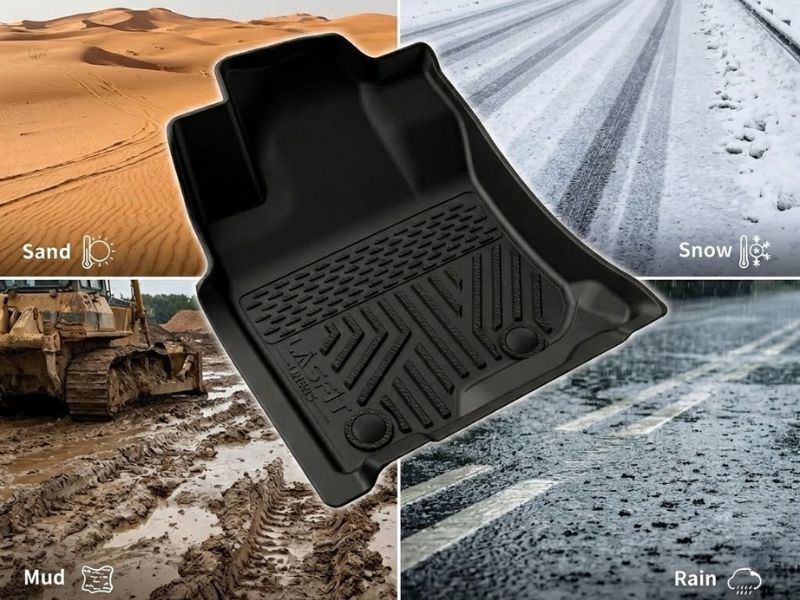
TPE is engineered to thrive where other materials fail. It boasts an incredible thermal range, remaining pliable and soft even at -40°C, while resisting deformation or melting at temperatures as high as 100°C.
In practical terms, this means your mats won't turn into brittle, dangerous plastic shingles during a blizzard, nor will they become tacky and lose their shape during a sweltering summer afternoon. They maintain their 3D-molded precision regardless of the weather outside.
2.2 Superior Liquid and Stain Resistance
Since TPE is a non-porous material, it acts as a total seal for your vehicle’s floorpan. Unlike factory carpet mats that absorb spills and trap moisture against the metal frame, TPE keeps liquids on the surface.
Whether it’s salt-laden slush, spilled soda, or muddy paw prints, the wicking effect is non-existent. This non-absorbent nature ensures that mold and mildew never get a foothold in your cabin, and cleaning usually requires nothing more than a quick spray with a garden hose.
2.3 Odorless and Non-Toxic Composition
That strong “new mat smell” is often caused by volatile organic compounds (VOCs) released from certain rubber or lower-grade PVC materials. In some cases, recycled PVC products that are not properly refined may contain residual additives that contribute to stronger odors, especially when the vehicle interior heats up.
Beyond its rugged performance, premium TPE is engineered with a focus on interior air quality. Unlike low-grade rubber, it is virtually odorless and verified to be free from harmful phthalates, lead, and cadmium.
=> Read More: A Guide to Non-Toxic Materials for Car Floor Mats
3. Safety First: Why TPE is the Responsible Choice
3.1 Anti-Skid and Precision Engineering

A sliding floor mat is a driver's nightmare.
Because TPE is injection-molded, it allows for incredibly intricate anti-skid textures and "nibbed" backings that aren't possible with basic rubber. These textures act like thousands of tiny anchors, locking the mat into the vehicle’s carpet fibers.
More importantly, TPE’s rigid structural "memory" ensures the edges never curl or lose their shape, effectively eliminating the risk of a mat bunching up and causing dangerous pedal interference.
3.2 Eco-Friendly and Recyclable
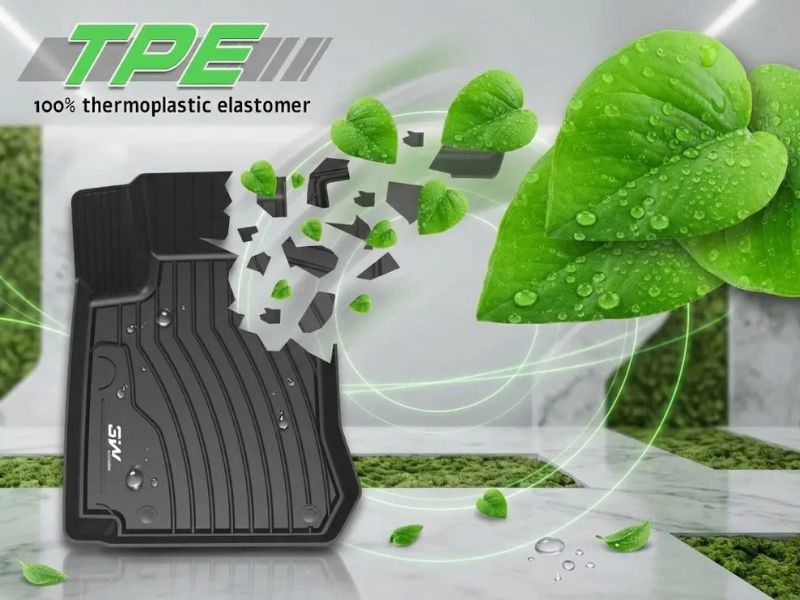
Unlike traditional vulcanized rubber, which undergoes a permanent chemical change during production, TPE remains a thermoplastic. This means it can be reprocessed and reused at the end of its lifecycle rather than permanently discarded.
Because it doesn’t rely on irreversible curing, TPE requires less energy to manufacture and supports a more sustainable production cycle. For drivers who value both performance and environmental responsibility, this makes TPE a forward-thinking material choice.
3.3 Allergy-Friendly Interiors
For those with sensitivities, the interior of a car can be a haven for irritants. Traditional carpet mats are porous, acting as sponges for pet dander, pollen, and microscopic mold spores.
TPE is entirely non-porous, meaning allergens simply sit on the surface where they can be wiped away. It provides an allergy-friendly barrier that prevents the growth of bacteria and fungi, ensuring your cabin remains a clean, breathable space for everyone.
=>Read More: Choosing the Right Car Floor Mat: Rubber, TPE, or PVC?
4. Durability Testing: How Long Do TPE Mats Last?
When assessing the lifespan of a floor mat, two scientific factors matter most: compression set and UV stability.
4.1 The Resilience of Low Compression Set
In material science, "compression set" is the permanent deformation remaining after a material has been compressed under a specific load. TPE is engineered with a remarkably low compression set, meaning it possesses a "structural memory."
Whether it’s the constant pressure of a driver’s heel or a heavy toolbox sitting in the trunk, TPE bounces back to its original 3D-molded shape once the load is removed.
Unlike traditional rubber, which thins out and eventually develops holes, TPE maintains its thickness and protective integrity for the long haul.
4.2 UV Resistance and Structural Stability
Constant exposure to sunlight through a windshield can turn ordinary plastics into a chalky, brittle mess. High-quality TPE mats are treated with UV stabilizers that prevent the polymer chains from breaking down under intense solar radiation.
This ensures your mats won't fade, warp, or crack, even if you live in the harshest climates. Because TPE remains structurally stable across millions of flex cycles, these mats often outlast the vehicles they protect, making them a one-time investment for the life of your car.
5. Is It Worth Buying? Cost vs. Long-Term Value
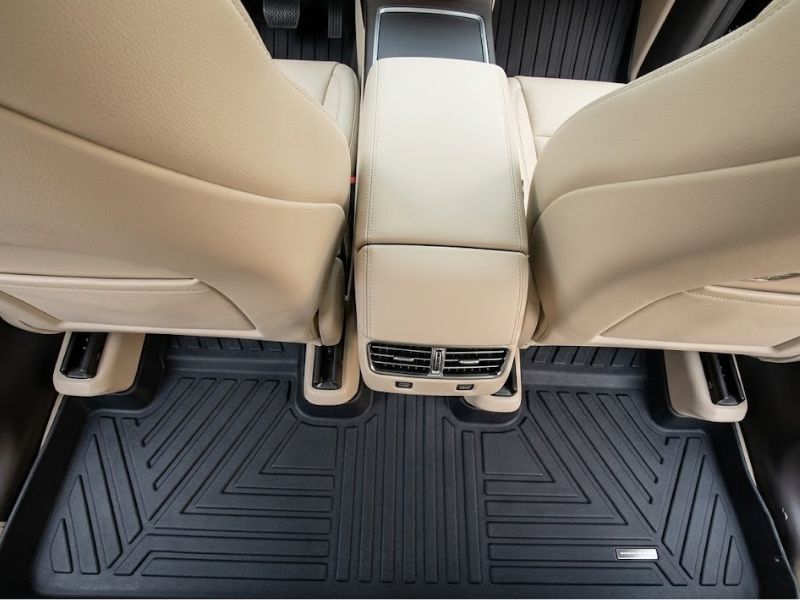
At first glance, a premium set of TPE floor liners, typically ranging from $120 to $200, might seem like a steep investment compared to $20 universal mats.
However, when you acknowledge what is TPE material and look at the lifecycle of your vehicle, TPE isn't just a purchase; it’s an insurance policy.
A single deep-clean session to remove salt stains or spilled coffee can cost $150 to $300, and a full carpet replacement can easily exceed $500 to $800 when labor is factored in. TPE mats pay for themselves by eliminating these professional cleaning fees entirely.
Beyond maintenance, they play a critical role in your car's resale value.
According to Kelley Blue Book, the difference between a vehicle in "Excellent" condition versus "Fair" can be thousands of dollars. By preventing permanent carpet fiber degradation, TPE mats ensure that when it’s time to trade in your car, your interior looks as pristine as the day you drove it off the lot, securing you a top-tier valuation.
Final Verdict: The Future of Floor Protection
In the landscape of automotive protection, TPE is widely regarded as the industry standard for modern all-weather floor protection. While the initial investment is higher than traditional rubber, the returns are undeniable.
Understanding what TPE is and why it’s used in car floor mats makes it clear why many drivers prefer it for its safety, durability, and environmental advantages.
Other articles

How to Clean Car Floor Mats: The Complete Guide for All Materials
What Is PVC Material for Car Floor Mats? High-grade Virgin vs Recycled Explained
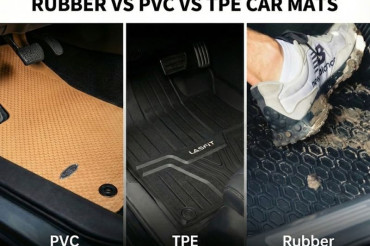
TPE vs Rubber vs PVC Floor Mats: Which Material Is Actually Best?



